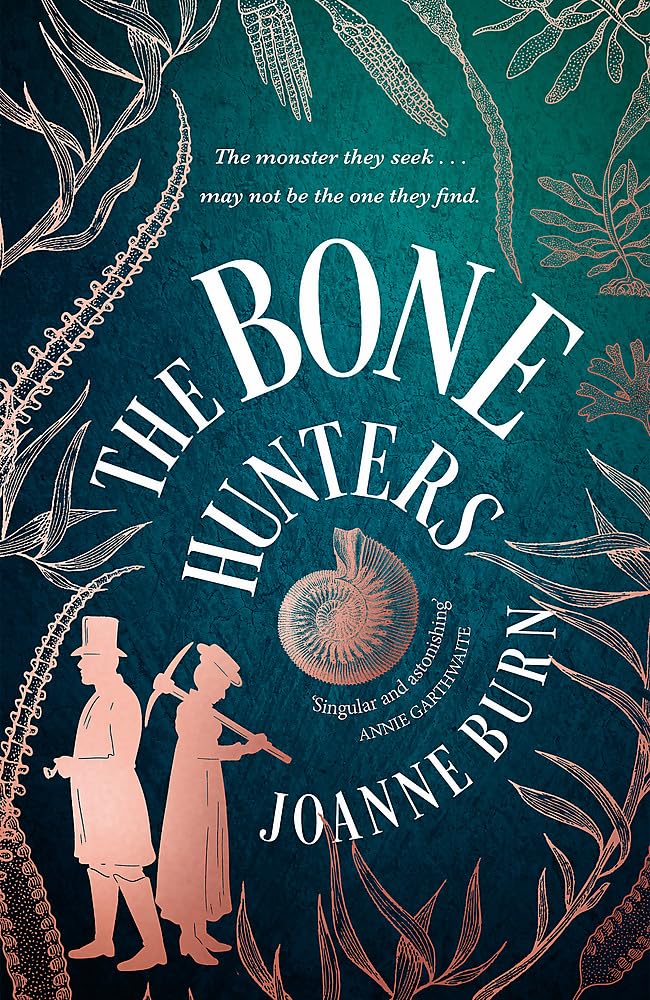
Publisher: Sphere Publication Date: 8th February 2024
Loosely based on the pioneering female palaeontologist Mary Anning the reader is introduced to the brilliant Ada Winters, who in 1824, combs the beaches of Lyme Regis in search of fossils and new scientific discoveries. Born into poverty, she scrapes by with her mother Edith, selling the curiosities she unearths from the sand and cliffs by her windblown cottage. She strikes a deal with Black Ven, a cliff she returns to time and time again, to give up its secrets and for this she would give everything.
The characterisation of Black Ven and its neighbour the sea were fascinating depictions within the novel. Both at times malevolent and a source of comfort and solace, their timelessness stands in direct contrast to the small and hard lives of the inhabitants that reside briefly next to them. I thought Ada’s drive to succeed and to learn in conjunction with the repeated rebuttals to be acknowledged by the scientific community make her a particularly compelling character as she tries to push through societal and gender conventions.
Edwin Moyles, a doctor, who’s real passion is Geology also scours the cliffs and landscape in search of a big discovery that will rock the foundations of both the scientific world but also the dominant religious beliefs of the time. How can something so old exist? What does this mean for our sense of self and humanities position in the world? I initially thought Edwin was going to be a heroic figure, that his passion and desire for discovery and learning would outweigh any chauvinism and masochism that perhaps dominated the higher echelons of society at this time. I was wrong. His character development and his interactions with Ada become increasingly uncomfortable and culminate in a shocking attack.
The reverberations and consequences of this act spiral out across the novel and I thought it was particularly effective how the writer uses this singular story to consider the treatment of women over time and how individuals who have not ‘known their place’ have been ostracised or categorised as being against God. This plays out in the novel through the stories and legends that pervade the landscape. Stories of witches and wolves that seek to harm those that are too curious or wayward. There is a supernatural element to the story but rather than becoming an unsettling presence, I found its presence comforting in that society may choose to reject different belief systems and ideologies but that does not mean they will simply go away. On the contrary their will always be people who will fight and challenge antiquated systems and within that, there is hope.
A thoroughly compelling read that evokes character and landscape in memorable ways. I am looking forward to reading more of the author’s works.
Thank you to NetGalley for my ARC.
 Currently Reading